

The standard Egypt tourist visa allows a maximum stay of 30 days per entry. Whether you enter with an e-Visa, visa on arrival, or embassy-issued visa, the allowed stay period is the same – 30 calendar days from your date of entry. You can extend this by 30 additional days at an Egyptian immigration office, giving you a maximum of 60 days total on a single visa.
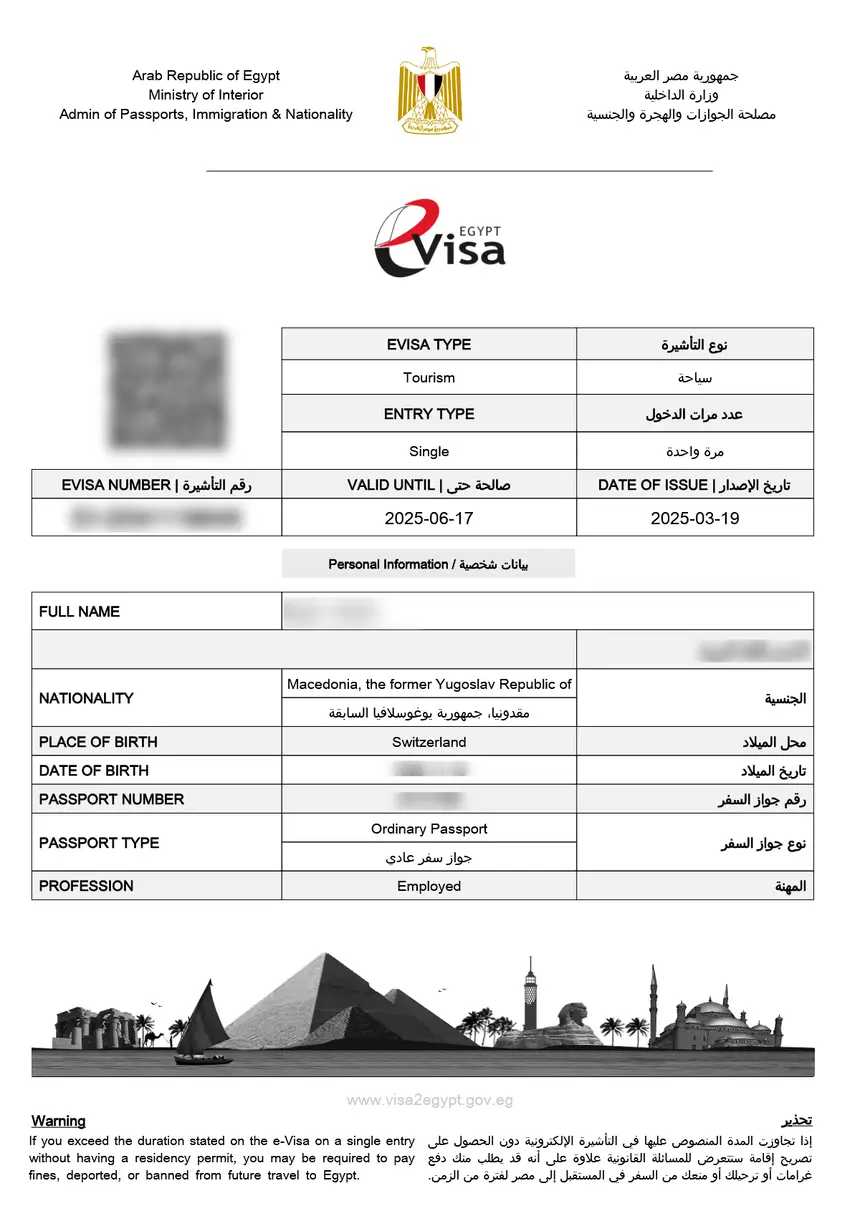
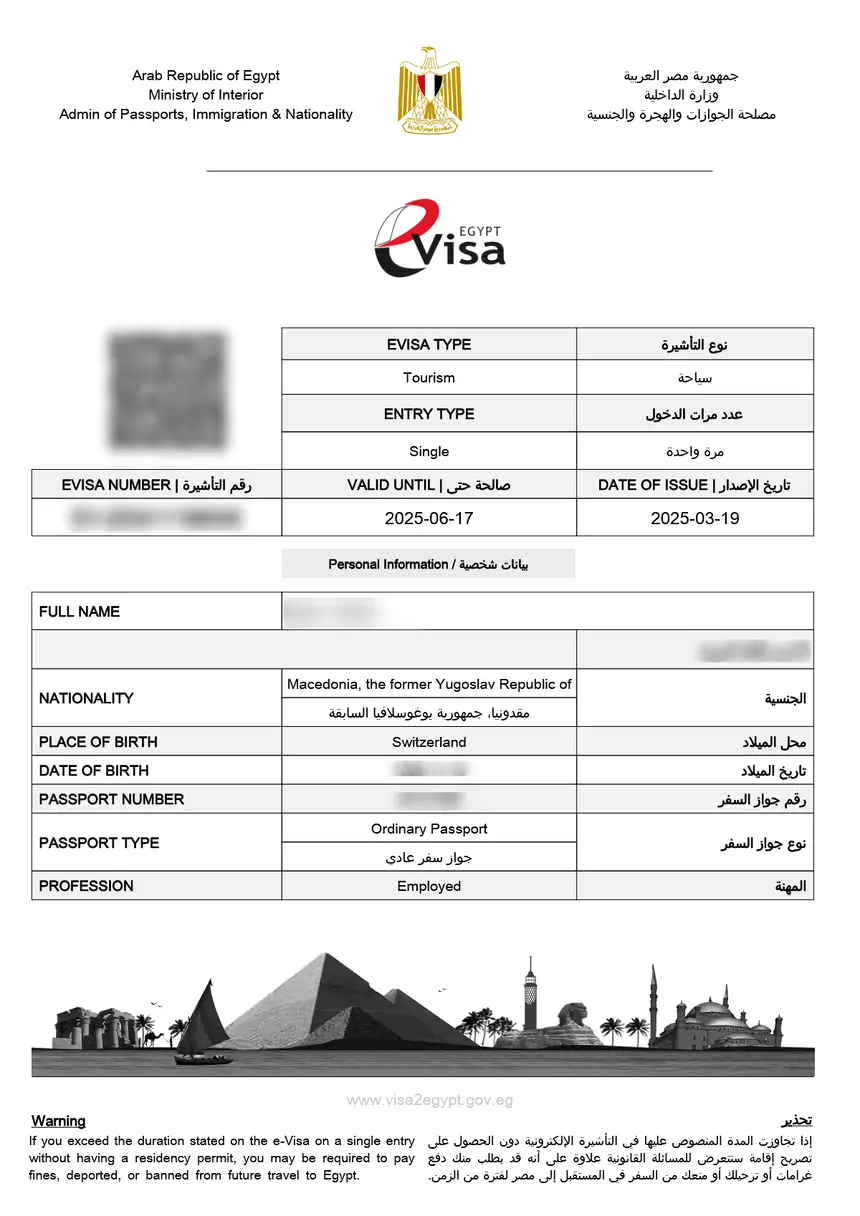
This guide explains exactly how long you can stay in Egypt under each visa type, how visa validity differs from stay duration, what happens if you overstay, and how to maximize your time in the country legally.
Egypt Stay Duration: The 30-Day Rule
Every standard tourist visa for Egypt – regardless of how you obtain it – permits a stay of 30 days. This applies to:
- e-Visa (single-entry) – 30 days from the date you pass through passport control
- e-Visa (multiple-entry) – 30 days per entry, with multiple entries allowed during the visa’s validity period
- Visa on arrival – 30 days from entry, purchased at airport bank counters
- Embassy/consulate visa – 30 days (or as stamped by the issuing embassy)
The 30-day count begins on the day you enter Egypt, not the day your visa was issued. For example, if you receive your e-Visa on July 1 but do not arrive in Egypt until August 10, your 30-day stay runs from August 10 to September 8.
For a full overview of entry rules, see our Egypt entry requirements guide.
Visa Validity vs Stay Duration
Visa validity and stay duration are two different things. Many travelers confuse them.
| Concept | What It Means | Standard Period |
|---|---|---|
| **Visa validity** | The window during which you can use the visa to enter Egypt | 90 days from issue date |
| **Stay duration** | How long you can remain in Egypt once you enter | 30 days per entry |
Your e-Visa is valid for 90 days from the date it is issued. This means you must enter Egypt within 90 days of receiving the visa. Once you enter, the 30-day stay clock starts. If your visa expires (the 90-day validity window closes) before you enter Egypt, the visa is void and you must apply for a new one.
Key point: If you receive your e-Visa on January 1, you must enter Egypt by March 31 (the 90-day validity window). Once you enter, you can stay for 30 days – even if that extends beyond the original validity date. The stay duration is based on your entry date, not the visa expiry.
Stay Duration by Visa Type
Different Egyptian visas allow different lengths of stay. Here is a complete breakdown:
| Visa Type | Stay Per Entry | Extendable? | Maximum Total Stay |
|---|---|---|---|
| **Tourist e-Visa (single)** | 30 days | Yes (+30 days) | 60 days |
| **Tourist e-Visa (multiple)** | 30 days per entry | Yes (+30 days) | 60 days per entry |
| **Visa on arrival** | 30 days | Yes (+30 days) | 60 days |
| **Embassy tourist visa** | 30 days | Yes (+30 days) | 60 days |
| **Business visa** | 90 days | Case-by-case | Up to 6 months |
| **Transit visa** | 48-96 hours | No | 96 hours max |
| **Visa-free entry** | Up to 90 days (select nationalities) | Varies | 90 days |
Most visitors use the tourist e-Visa or visa on arrival, both of which cap at 30 days with an option to extend once. For details on which visa suits your trip, see our Egypt visa types guide.
Multiple-Entry e-Visa Stay Rules
The multiple-entry e-Visa is valid for 180 days from issue. During that window, you can enter Egypt multiple times, but each individual stay is limited to 30 days. You cannot stay for 30 days, leave for a day, and return for another 30 days indefinitely – immigration officers may question repeated back-to-back entries.
The multiple-entry visa is ideal for travelers who plan to visit Egypt, travel to nearby countries (Jordan, Israel, or the UAE), and return. Each re-entry starts a fresh 30-day stay.
For pricing details on single vs multiple entry, see our Egypt visa pricing guide.
How to Extend Your Stay Beyond 30 Days
You can extend your Egypt tourist visa by 30 additional days at an immigration office. The process must be done in person – there is no online extension option.
The main immigration office is the Mogamma building in Tahrir Square, Cairo. Regional offices in Alexandria, Hurghada, Sharm El Sheikh, Luxor, and Aswan also process extensions.
| Detail | Information |
|---|---|
| **Extension length** | 30 additional days |
| **Cost** | 500-1,000 EGP ($10-$20 USD) |
| **Processing time** | 1-3 business days (Cairo), 5-7 days (regional) |
| **When to apply** | Before your current 30 days expire |
| **Maximum extensions** | One per visa |
What You Need for the Extension
- Valid passport (6+ months remaining validity)
- Passport copies (bio page + visa page, 2 copies each)
- 2 passport photos (4×6 cm, white background)
- Proof of accommodation for the extension period
- Cash in Egyptian pounds for the fee
For a complete walkthrough, see our Egypt visa extension guide.
What Happens If You Overstay
Overstaying your Egypt visa results in a financial penalty – and potentially more serious consequences for longer overstays.
| Overstay Duration | Penalty |
|---|---|
| **1-30 days** | ~1,600 EGP (~$50) fine |
| **1-3 months** | ~1,600 EGP per month overstayed |
| **3-6 months** | Higher fines + possible detention |
| **Over 6 months** | Deportation, future entry ban possible |
You pay the overstay fine at the airport when departing. Immigration calculates the amount at passport control, and you must pay in Egyptian pounds before being allowed to leave. Currency exchange counters are available in the departure hall, but the rates are poor.
Important: The overstay is recorded in your immigration file. Future visa applications may face additional scrutiny, and repeated overstays can lead to a ban on re-entry.
Visa-Free Countries: Longer Stays
Citizens of certain countries can enter Egypt without a visa for up to 90 days. These include nationals of:
- Hong Kong – 90 days visa-free
- Macau – 90 days visa-free
- Malaysia – 90 days visa-free
- Several other select nationalities (check current rules)
If you hold a passport from a visa-free country, the stay rules are different from the standard 30-day tourist visa. The allowed stay is typically longer (up to 90 days) and does not require a pre-arranged visa.
For the full list, see our Egypt visa-free countries guide.
Maximizing Your Stay in Egypt
Here are practical strategies for travelers who want to spend as much time in Egypt as legally possible:
| Strategy | Total Stay | Cost | Best For |
|---|---|---|---|
| **Standard visa** | 30 days | $25-$30 | Short vacations |
| **Visa + extension** | 60 days | $35-$50 | Extended holidays |
| **Visa run (leave & re-enter)** | 30+ days per entry | $100-$400 per run | Long-term travelers |
| **Multiple-entry e-Visa** | 30 days × entries | $60 | Multi-trip itineraries |
A visa run means leaving Egypt and re-entering with a fresh 30-day visa. The most popular destination is Jordan (Aqaba) – just 1 hour by flight, with return fares often under $200. The ferry from Nuweiba to Aqaba is another affordable option (~$70-$90). Each re-entry gives you a new 30-day stay with its own extension option.
How to Calculate Your Exit Date
To avoid overstaying, count your exit date carefully:
- Day 1 is the day you pass through Egyptian passport control (your entry stamp date)
- Count 30 calendar days (not business days – weekends and holidays count)
- You must leave Egypt on or before Day 30 unless you have an approved extension
- If you extend, your new exit date is Day 60
Example: You enter Egypt on March 1. Your 30-day stay runs through March 30. You must leave by March 30 or apply for an extension before that date. If extended, your new deadline is April 29.
Frequently Asked Questions
How long can I stay in Egypt with an e-Visa?
The Egypt e-Visa allows a stay of 30 days per entry. You can extend this by an additional 30 days at an immigration office for a maximum of 60 days total.
Is the stay limit different for visa on arrival?
No. The visa on arrival also allows 30 days, the same as the e-Visa. The difference is how you obtain the visa (at the airport vs online), not how long you can stay.
Can I stay in Egypt for 90 days?
Only if you are from a visa-free country (such as Hong Kong, Macau, or Malaysia). Standard tourist visa holders get 30 days, extendable to 60. For 90 days, you would need to do a visa run – leave Egypt and re-enter with a fresh visa.
Does the 30-day limit include the day of entry?
Yes. Day 1 is the day you pass through passport control. You must leave on or before the 30th day (counting from your entry date) unless you have an approved extension.
Can I extend my stay without leaving Egypt?
Yes. You can extend your tourist visa by 30 days at the Mogamma immigration office in Cairo or at regional immigration offices. The extension costs 500-1,000 EGP and takes 1-3 business days to process. You must apply before your current visa expires.
What is the difference between visa validity and stay duration?
Visa validity is the window during which you can enter Egypt (90 days from issue for an e-Visa). Stay duration is how long you can remain in Egypt once you enter (30 days). Your visa can expire after you enter – what matters is the stay duration stamped at passport control.
How much is the overstay fine in Egypt?
The standard overstay fine is approximately 1,600 EGP (~$50 USD) per month overstayed. You pay at the airport when departing. Overstays longer than 6 months can result in deportation or future entry bans.
Can I do a visa run to extend my stay?
Yes. A visa run means leaving Egypt and re-entering with a fresh 30-day visa. The most popular destination is Jordan (Aqaba), which is 1 hour away by flight. Each re-entry starts a new 30-day period with its own extension option.
How long can US citizens stay in Egypt?
US citizens can stay 30 days on a tourist e-Visa or visa on arrival. The e-Visa costs $25 (single) or $60 (multiple). You can extend by 30 days at an immigration office. See our Egypt visa for US citizens guide for full details.
Is there a limit on how many times I can enter Egypt?
With a multiple-entry e-Visa (valid 180 days), you can enter multiple times, but each stay is limited to 30 days. Immigration officers may question repeated back-to-back entries that appear to circumvent the stay limit.